A song thrush, bringing beauty to a barbed wire gate.

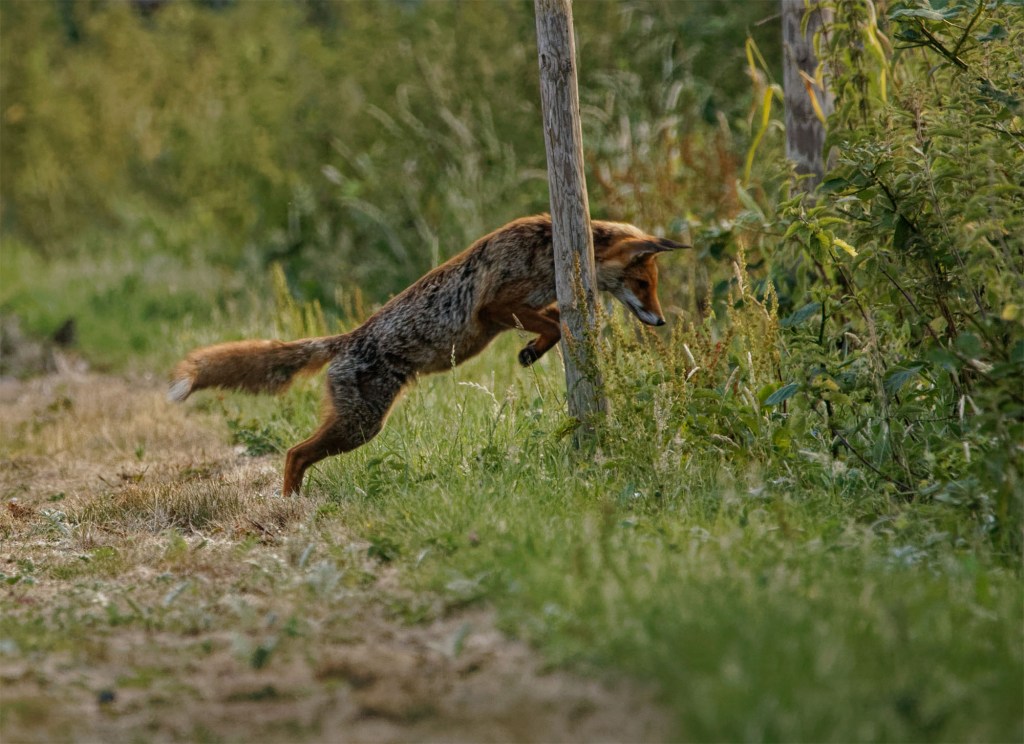
And a fox, turning rubbish into a useful perch.

Nature, humanity. We weave a pattern together, yet it grows increasingly uneven. Humans have become the conductors of the orchestra in which wild things must find their notes.
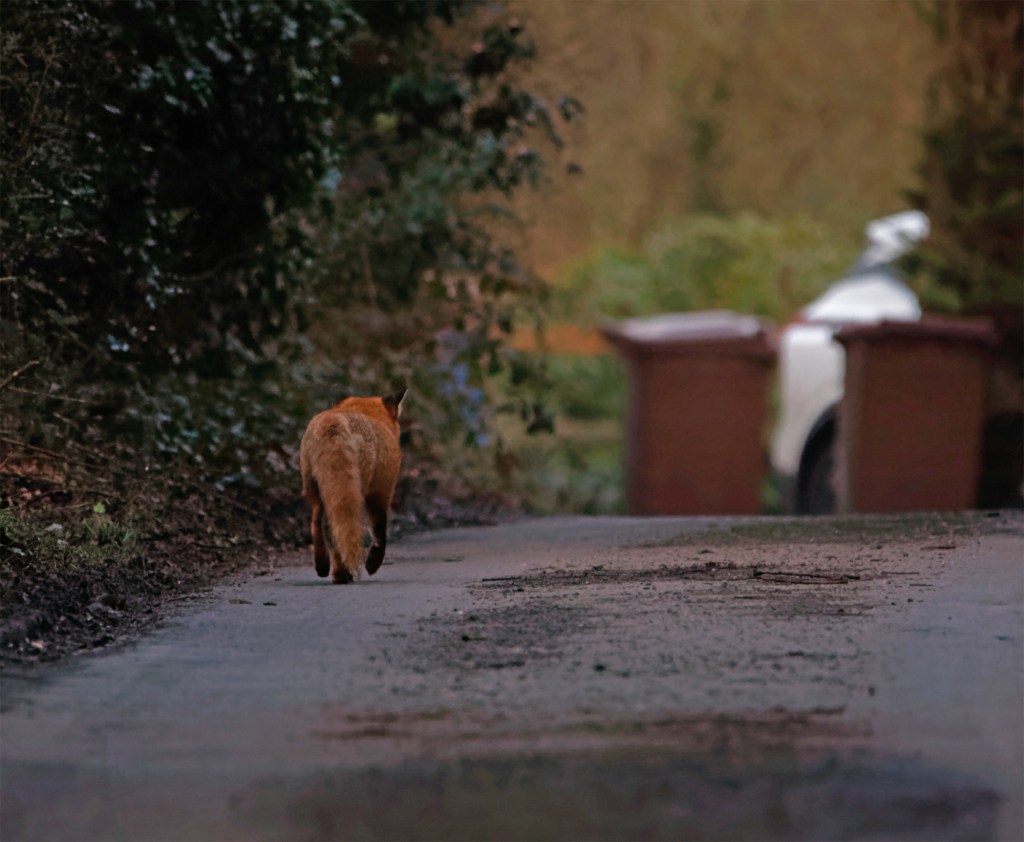
Is that always negative? As I’ve often blogged, ancient human activities are an integral part of practically all our English ecosystems, including our precious grasslands and heaths. Even today, in an era when we destroy far more than we create, we unwittingly leave opportunities scattered about like hidden bonuses in a computer game: a road network that pigeons use to navigate, garden ponds where toads are born, vehicles that carry plant seeds.

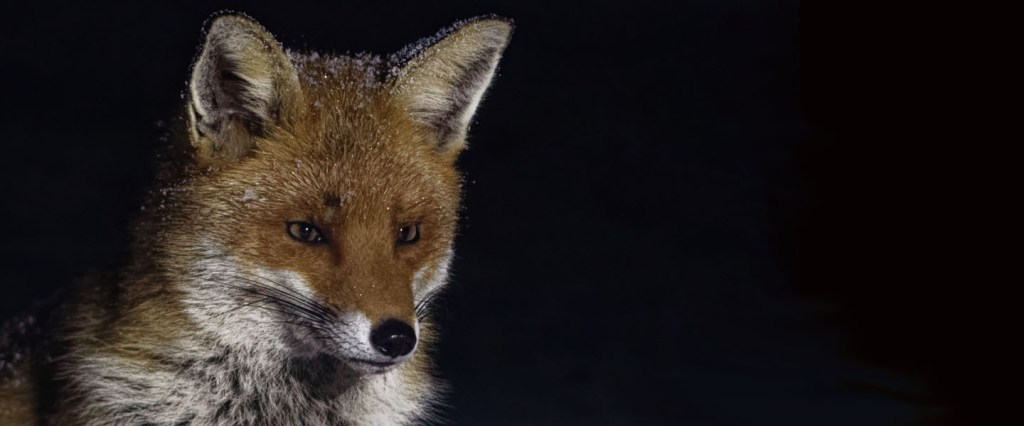
We endlessly nudge nature. Take this fox: he sits in a field used for sheep grazing. He is wild, but his circumstances are the product of people. The grass height is very low, which reduces the potential for him to hunt field voles. If the sheep are dipped, the chemicals are a hazard. But he also benefits from the hedges traditionally planted as field boundaries.
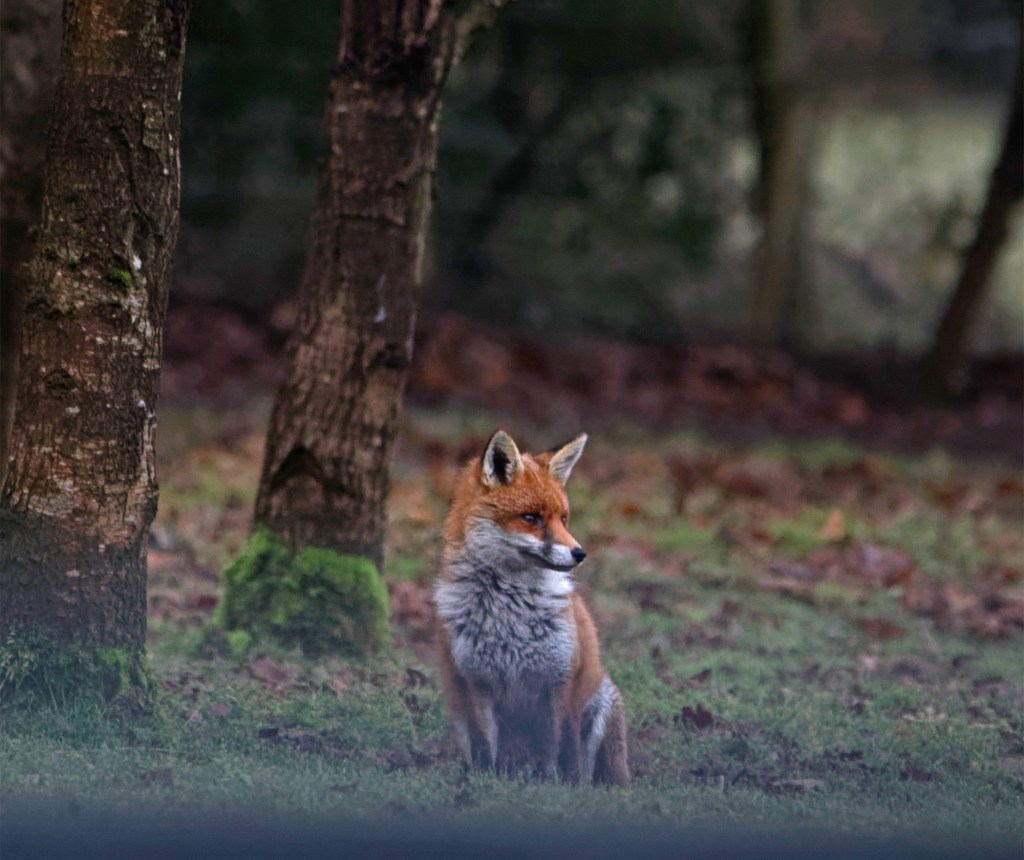
None of these choices are made with the fox in mind, yet he lives in their shadow.

And so it continues. What we do, affects our neighbours. And they in turn paint the corners of our lives with a little bit of defiant wildness.

17 responses to “Defying the Wire”

  1. I love the details on the thrush, and yes, nature seems to be in response mode to our actions (typically harmful). But ultimately, I believe nature can and will adapt even if we harm ourselves off the planet.

    Liked by 1 person

    1. A complete disappearance of humans would harm European / British wildlife; people are a keystone species in most ecosystems here and have been for thousands of years. But the pressure we exert is currently out of balance in many places. We’ve become too efficient, too tidy, too greedy and sometimes too reckless. But there is kindness and tolerance out there too.

      Liked by 1 person

    1. Unfortunately there has been a political shift lately which paints nature as a burden and a blocker to economic growth rather than something we should be honoured to share the land with. I disagree with this shift, as do many other British people.

      Liked by 1 person

  2. Great post, Adele. You’re so right about how people and animals adapt and the world is ever changing. Adapt or die.

    Liked by 1 person

    1. On a more humorous note, foxes do readily adapt to trampolines and footballs – the upside of living alongside us.

      Liked by 1 person

      1. That would be fun to see.

        Liked by 1 person

  3. No matter how heavy-handedly human society treats the natural world, the equations for wildlife survival are complicated enough that some of the things we do open opportunities for the natural world to use our re-formations of the world for its own purposes.

    Liked by 1 person

    1. Yes indeed. Birds and arable farming are a case in point. Modern crop production is so intensive that many farmland bird species are in serious decline, but some have benefited. Woodpigeon numbers have gone through the roof in recent years.

      Like

  4. It’s nice to know that our actions, however unwittingly, can help the natural world. I enjoyed your thoughtful post and wonderful photos!

    Liked by 1 person

    1. Thank you Belinda. We are constantly creating little niches whether we’re aware of it or not, and something is usually on hand to take advantage.

      Liked by 1 person

  5. Sometimes I am thinking how great it would be for wildlife, entire ecosystem, if we humans would just disappear – everything would level itself in natural self-sustaining way.

    Heard American Robin singing the other day. Spring is coming 🙂

    Liked by 1 person

    1. I am ready to welcome spring! It has been bright and sunny here for the last week but still cold in the mornings. I heard my first skylark of the year yesterday.

      People do play an important role in many European and British ecosystems and many species would suffer in our absence. There are no mammoths or aurochs to keep grasslands open anymore. But we do need to relearn the meaning of self-restraint, and fast.

      Like

  6. When I think of how heavy-handed and greedy we humans are, it’s a wonder that the natural world has done this well up til now, although I am always reminded that in the end, nature will have the final say.

    Liked by 1 person

    1. Yes. Unfortunately there is a subculture here that thinks of nature as nothing more than a quaint backdrop to the ‘real’ (i.e. urban) world. This is wrong on so many levels, not just insulting nature itself but also the many rural British people whose sense of place is deeply intertwined with it.

      Liked by 2 people

  7. “They in turn paint the corners of our lives with a little bit of defiant wildness” – well said, Adele.

    Liked by 1 person

    1. Thank you, and sorry for the slow reply!

      Liked by 1 person

Leave a comment

Trending