They form bubbles over the wintry hills like a thousand tiny planets frozen in orbit.
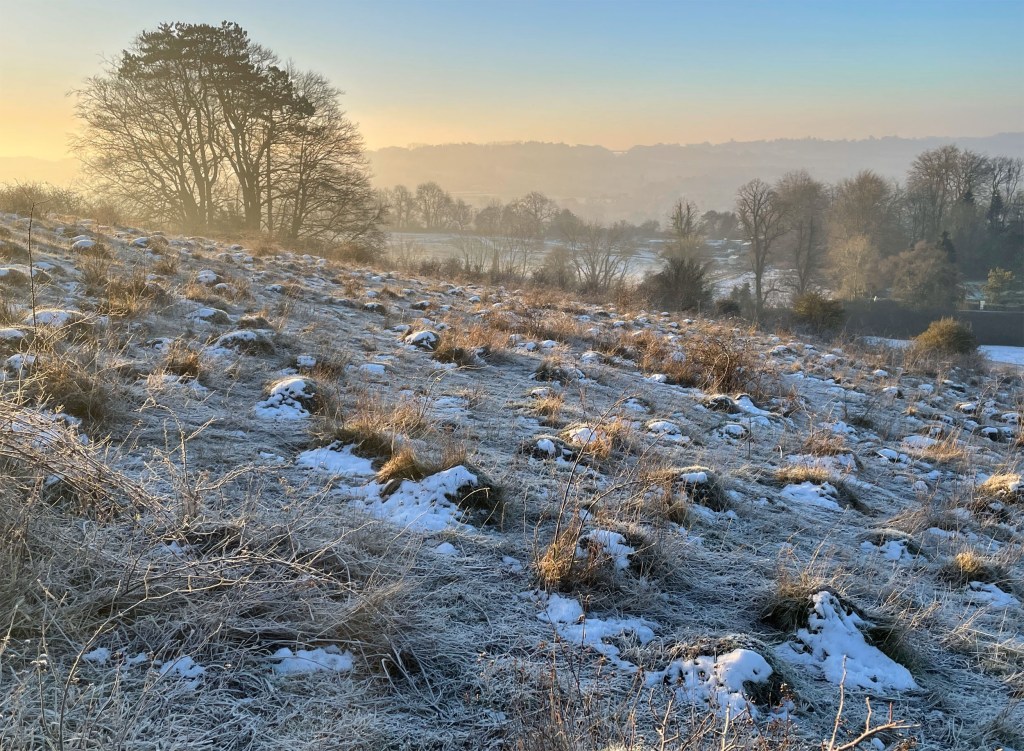
These sprawling ranges of unnamed mountains are the artwork of the yellow meadow-ant Lasius flavus, one of a number of wild things generally known only by architecture they leave behind. The anthills we see are the colony’s penthouses – they extend well below ground too, hosting a queen and all her attendants. Anthills grow slowly, like oak trees, and a grassland peppered with them is likely to be old and extremely rich in nature.
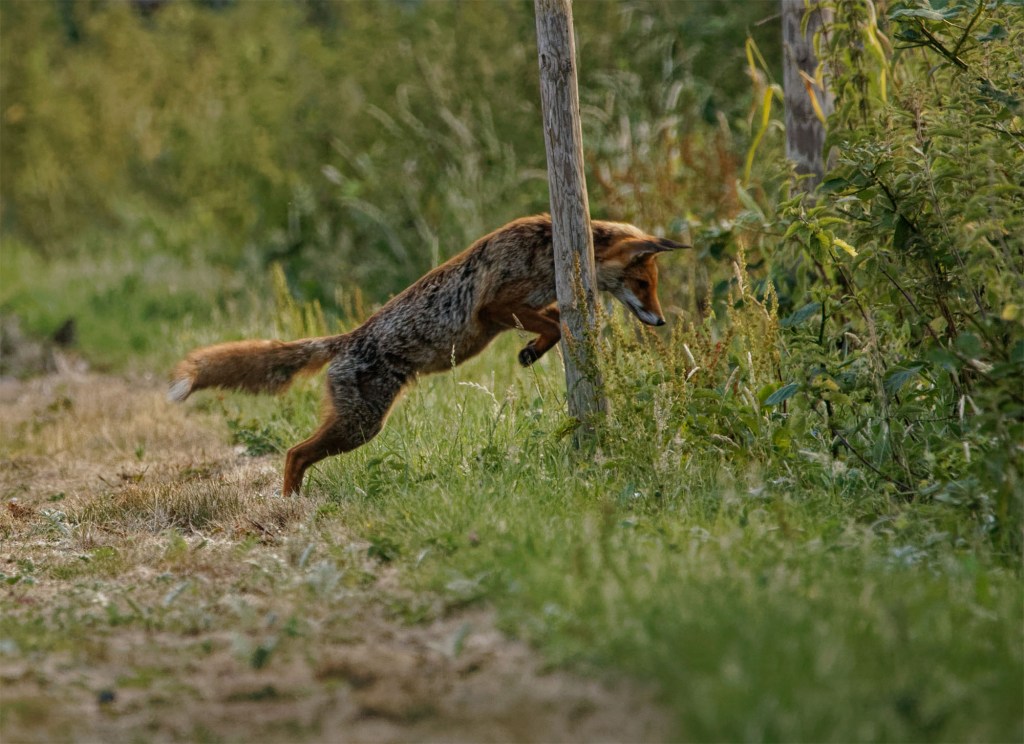
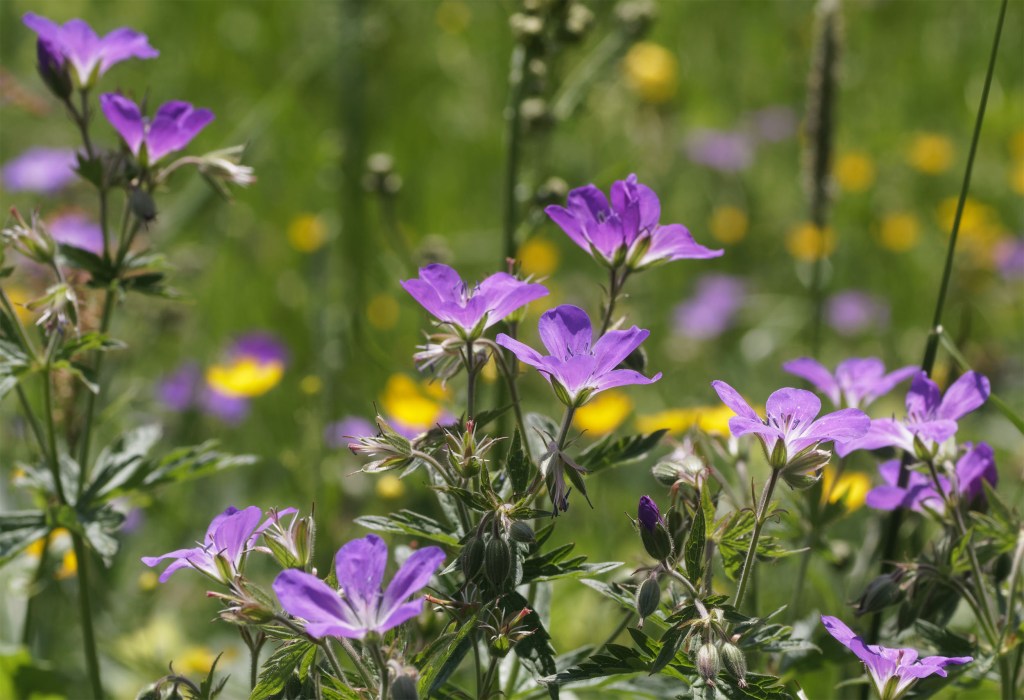
In winter, they catch snow. In summer, they are hugged by wildflowers – crosswort in the top right here, with a fox for scale.
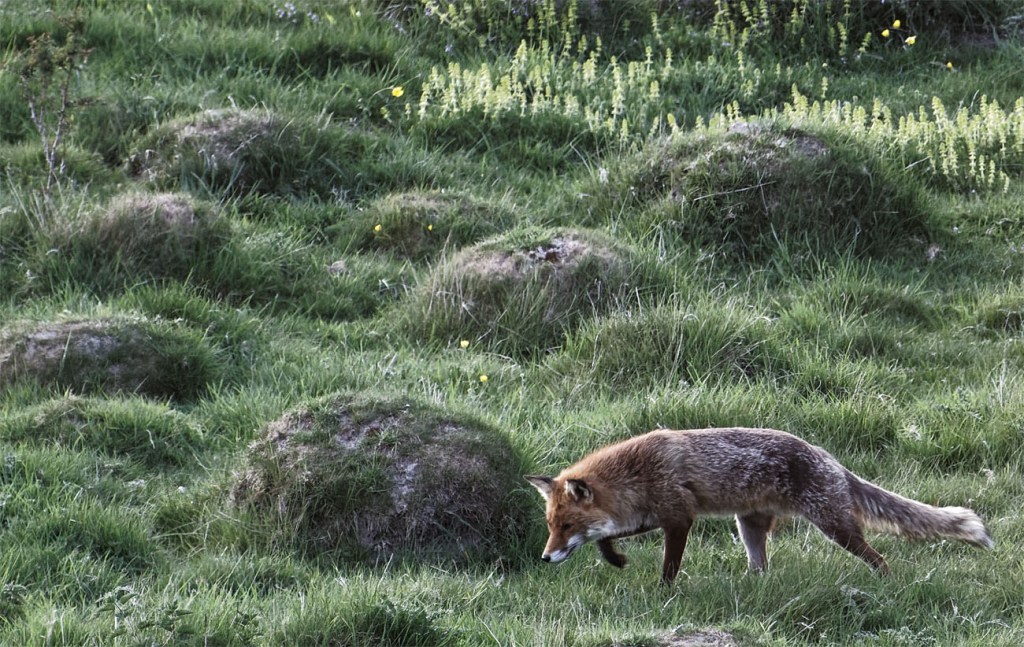
It is odd to remember summer in these days when bracken is stiff and puddles are roofed with exquisite ice patterns. But this hillside has seen the seasons change ten thousand times since the end of the Pleistocene. Warm seasons have drama: horseshoe vetch and chirping crickets, chalkhill blue butterflies and their caterpillars – which feed honeydew to the meadow ants as a tradeoff for protection.
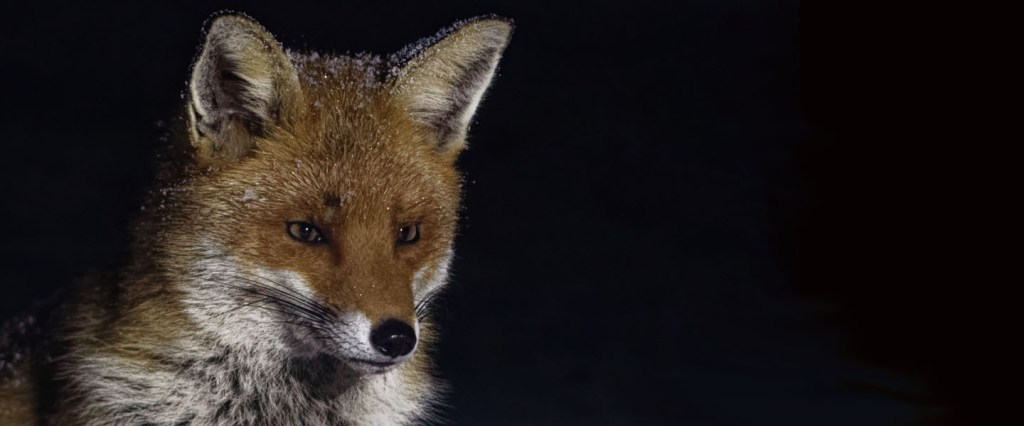
Summer was the past, and also the future. In the now, in the depths of January, the most dramatic part of nature remains foxes on the quest for each other.

Their courtship barks ricochet under bright stars, across roads and gardens, school playing fields and woods. Their travels take them through human shadows, past dogwalkers and people tending the horses.
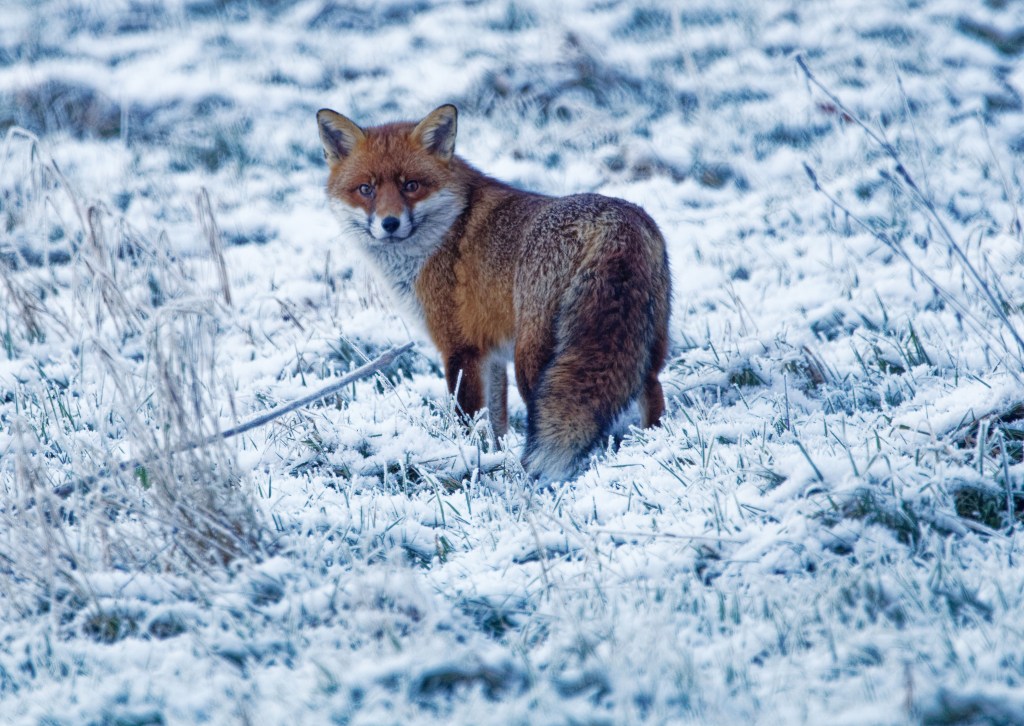
The moon and Venus look down on them.
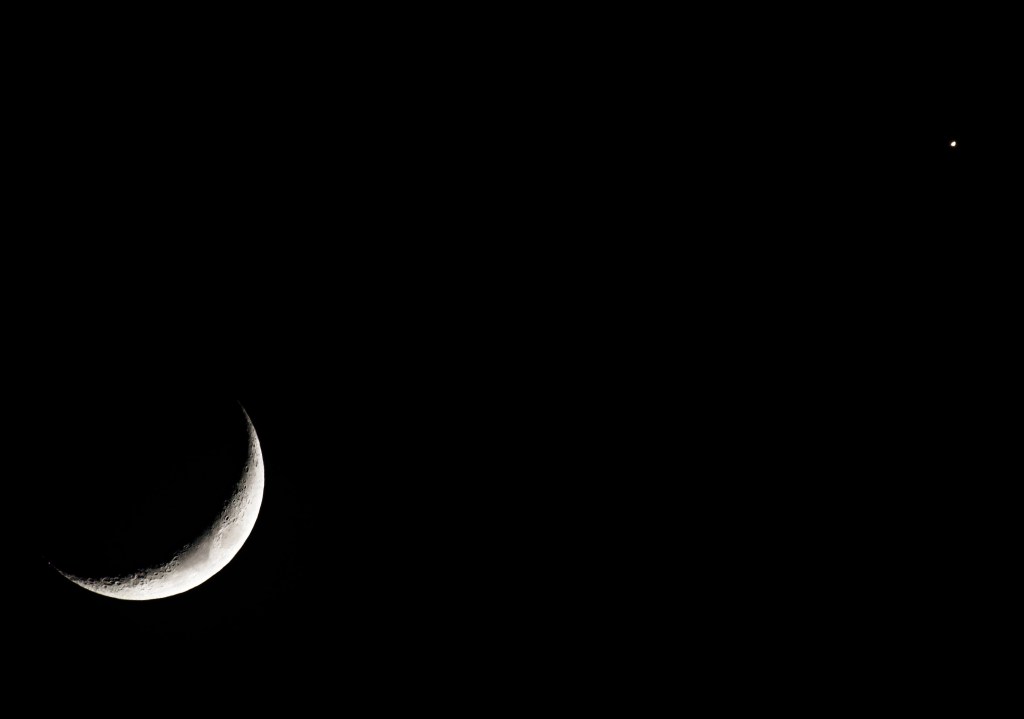
Like the ants, they have seen it all before.



 A Walk with Wildlife
Leave a reply to Adele Brand Cancel reply