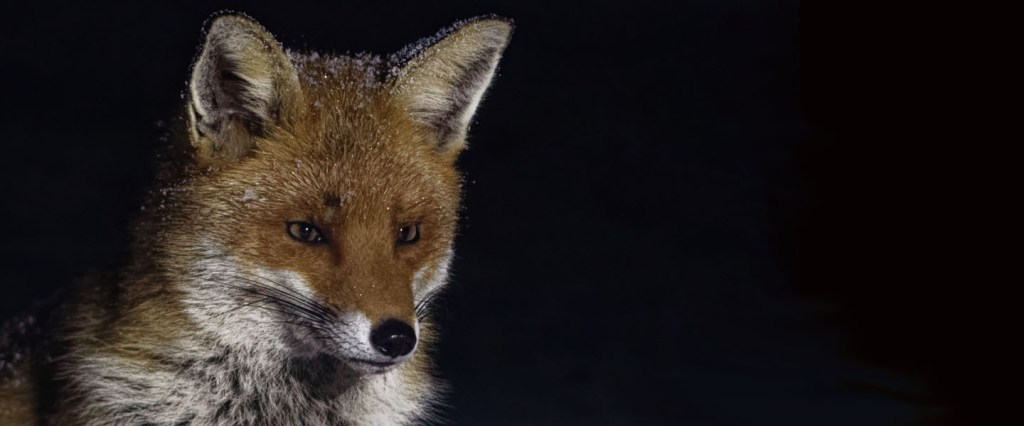
Small grey paws on a hot shadowed road. That was over a decade ago now – meetings with the grey fox Urocyon cinereoargenteus, the cousin-that-isn’t to the red fox of the north.

I spent summer 2014 in the hot, hot, remote and horsefly-haunted Mexico / Guatemala border region, tracking jaguars and tapir through a jungle where Mayan ruins spike the tropical canopy. The Reserva de la Biósfera de Calakmul is a throbbing 7,000 square kilometre wilderness of man-sized spiderwebs and rhythmic frog calls. Wild cats of many kinds call it home – here’s an ocelot on the hunt.
And foxes. It does have foxes.
But a fox that is a stranger to me. The grey fox is an outlier in the canid family, and for more reasons than its semi-retractable claws and quaint habit of climbing trees. Genetically, it is out on a limb, counting only the rare Californian island fox as a close relative. Small, compact and curious, it is much more selective than the red fox in choosing a wooded home. It also heads deeper into the hot and humid parts of the globe – its range touches Columbia, far to the south of the red fox’s natural latitude.
I met grey foxes on-off that summer as they trotted like quicksilver across humid jungle roads and peered into my trailcam. I have been reflecting on them today because I am gradually uploading my international nature experiences to here, and have just completed the Mexico page. Hard to believe it’s been 11 years. I can still hear the spider monkeys scream as they hounded me.

And smell the stench of the bat cave – this is a hollow landscape where underground kingdoms host literally millions of living, flying things.

And remember the dazzle of glorious birds.


Family Canidae offers this magic: in practically all terrestrial habitats, they place a member of the tribe. From the Arctic to the steppe to the rainforest, there is always at least one species of fox or their kin. The extreme adaptability of canids – their ability to adapt to local diets and climates – has stretched their reach across the globe. Unless you are reading this from an island or Antarctica, a wild canid will not be far away.
It is a pattern as predictable as the sunset.



 A Walk with Wildlife
Leave a reply to Lynette d’Arty-Cross Cancel reply