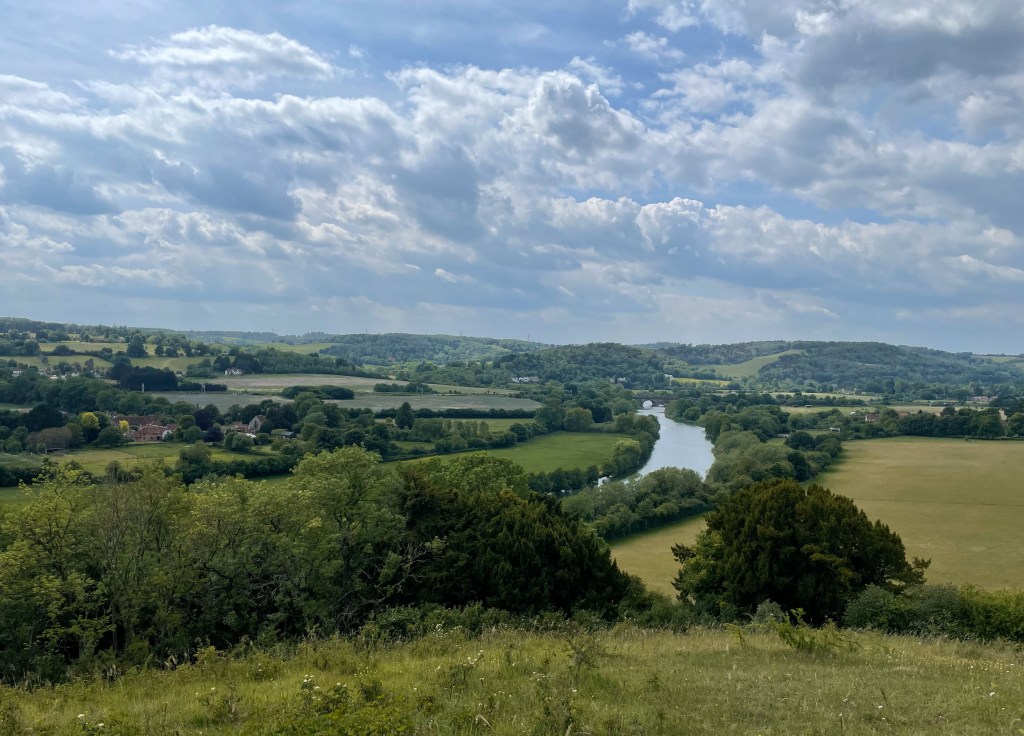
High above the River Thames they gather: a family that has known disaster and adoration, now with grandchildren who must navigate a changing world.
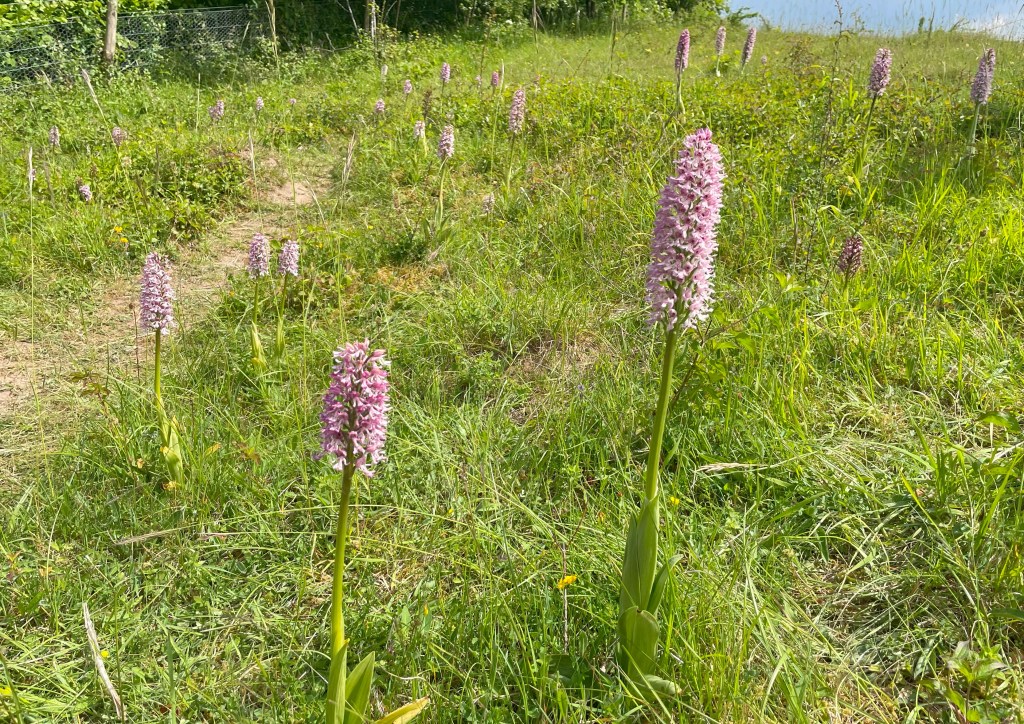
Orchids are not like other plants. Their miniscule seeds are carried across seas by the wind yet are so lacking in energy, they cannot germinate without the help of soil fungi. Some species do not flower until they are a decade old. And many live on the endangered list because modern agriculture – and historic plant collection – has hit them very hard.

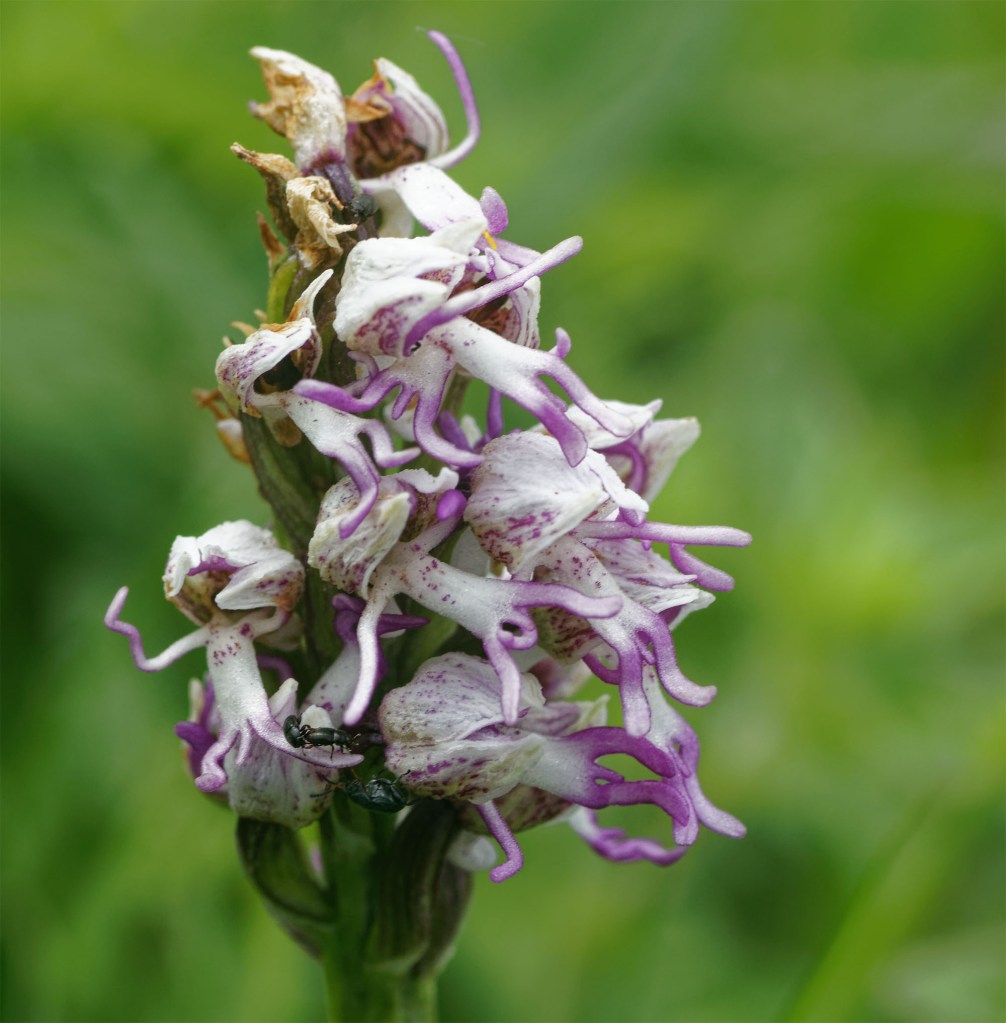
But they are a family, and face the challenges together. Member no. 1: the monkey orchid Orchis simia with its ludicrous purple and white monkeys. Restricted to just three English sites, it is also probably smaller than it used to be due to big specimens being favoured by collectors. In a country full of very weird plants, this is one of the oddest. Do they really look like monkeys? Well…
But it is not alone. Family member no. 2: the military orchid. It is gone from this hillside – a vanishingly rare plant, I was staggered to find one last spring in another county – but as the Thames sloshes on, the soldier is still here in spirit. Genetic testing shows that long ago it hybridised with monkey orchids. Its genes cling on as ghosts.
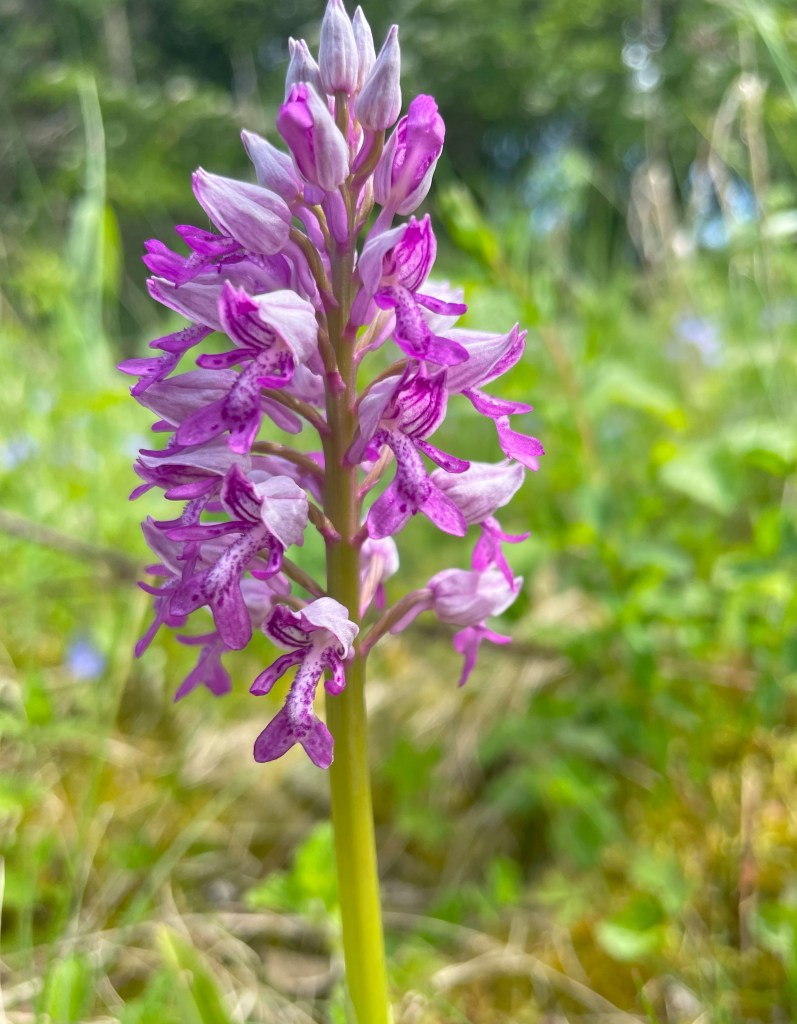
Last year’s military orchid

If the military orchid is missing, the lady is present and accounted for. She is family member no. 3: Orchis purpurea, wearing wide bloomers and a dark bonnet. But no, something is awry. She has a tail!
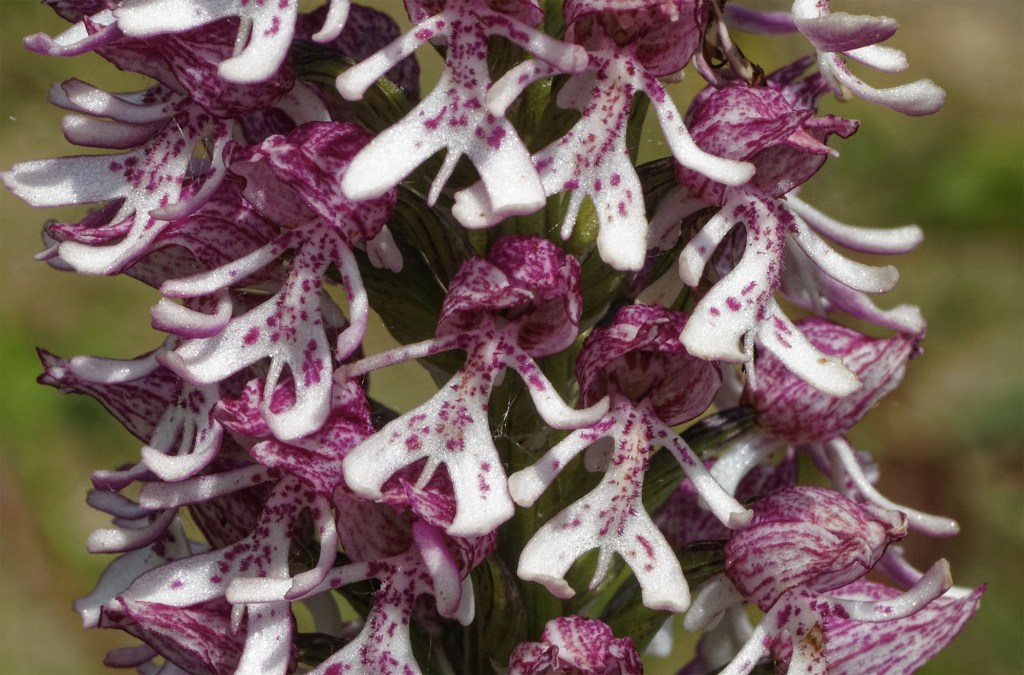
A monkey orchid / lady orchid hybrid. There are some genuine ladies scattered on the hillside, but most have monkey (and by extension, military) genes. Here is one of nature’s riddles: species can only persist as unique forms if they are mostly reproducing with their own kind, and yet many – from wolves to toads – will mate with related species if given half a chance. A hybrid zone then forms between the two parent species.

Orchids are very fond of this game, but for three of our rarest species to mix is extraordinary. This is the only hillside in England where you can see such a thing.

But even if they are a scientific head-scratcher, they are beautiful.
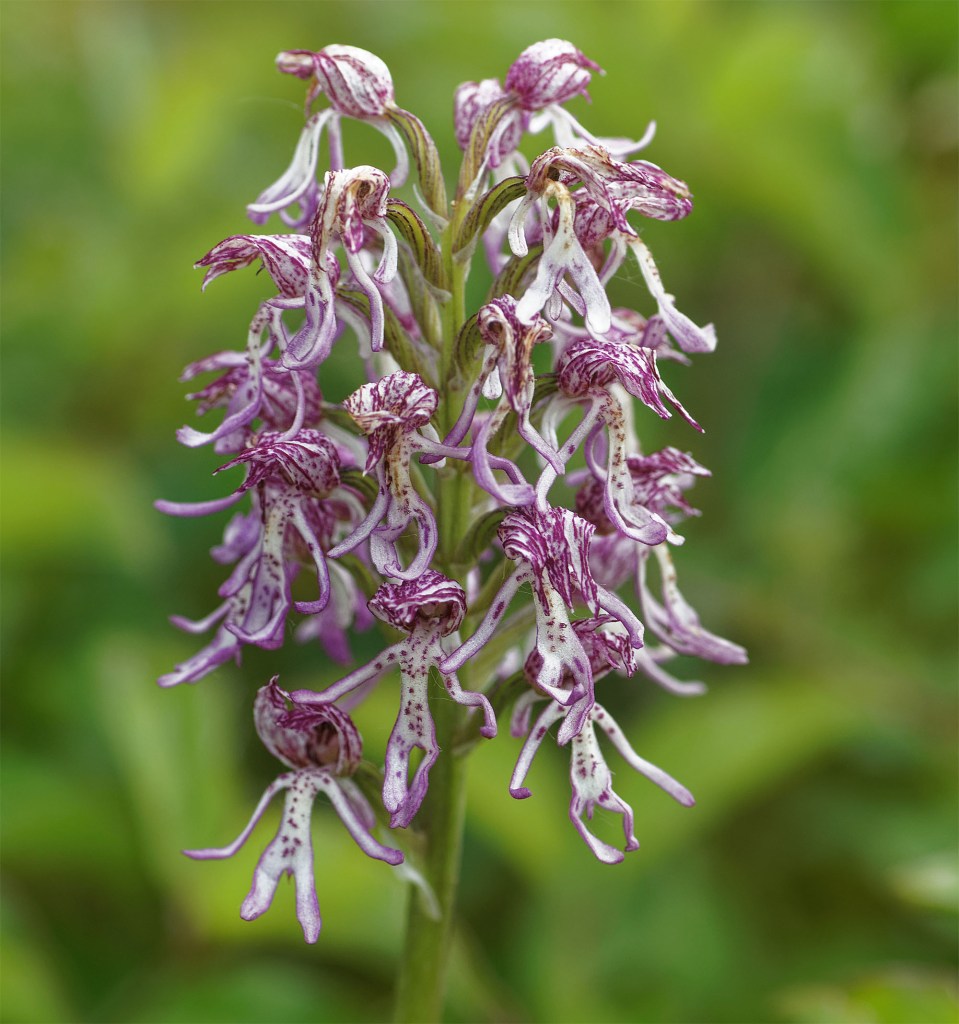
And the Thames will have seen it before.
21 responses to “The Lady, the Soldier and the Monkey”

  1. Thank you for such beautiful photos and a clear explanation.

    Liked by 1 person

    1. Thank you Cathy. A real treat to see these beautiful wildflowers.

      Like

  2. Wow! This is a very interesting post, Adele. I know very little about orchids and definitely didn’t know that they will mate with related species to such a degree. In this case the hybridisation ensures that all three types will survive.

    Liked by 2 people

    1. I have been trying to think if I ever saw any wild orchids in Canada. I don’t think so – maybe I was usually there too early in the spring.

      Liked by 1 person

      1. We do have them; I’ve seen a number of different types when canoeing in the back country but here’s a site indicating that there are many more. Cheers.

        Liked by 1 person

    2. Excellent! Thank you. I’m amazed that 13 species are found in Nunavut. These are strange but tough plants.

      Liked by 1 person

  3. Thanks for the fun and new info about orchids Adele.

    Liked by 1 person

    1. Thanks Brad. A baffling and fascinating family!

      Liked by 1 person

  4. Orchids the world over are a promiscuous bunch! 😉

    Liked by 1 person

    1. Just to make scientists’ lives even harder, no doubt 😉 I saw some other hybrids in the western UK last year (common spotted x southern marsh I think) and they were huge. Looked like tropical orchids. Not really sure why the hybrids are so much bigger than the parents!

      Liked by 1 person

  5. Very interesting! I never knew about the cross-breeding. Life is full of surprises!

    Liked by 1 person

    1. The complexity of life out there, and its various hybrids, is truly mindboggling!

      Like

  6. One of the things I like about orchids is that they are so different from each other. So many shapes and colors.

    Liked by 1 person

    1. Yes, and shaped like everything from slippers to spiders.

      Liked by 1 person

      1. Exactly! And that’s part of what makes them so special.

        Like

  7. Is it only because we must label everything? Maybe they have always hybridised just to carry on? Loved this article 👍

    Liked by 1 person

    1. Thanks Brian and welcome here. It does seem that the old definition of ‘species’ doesn’t always fit the messy reality. The fact that all these orchids still survive as distinctive forms suggests that there is, or was, some natural mechanism to keep hybridisation on the margins. It is fascinating, and confusing!

      Liked by 1 person

  8. Lovely images and interesting info.

    Liked by 1 person

Leave a reply to Bridget Smith Cancel reply

Trending